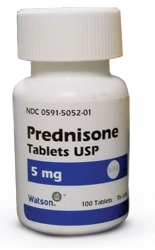
Prednisone
What is Prednisone? Prednisone is a synthetic hormone commonly referred to as a “steroid.” Prednisone is very similar to the hormone cortisone, which your own body manufactures. Prednisone is used to treat many illnesses.
In part, prednisone acts as an immunosuppressant. The immune system protects you against foreign bacteria and viruses. In some illnesses, the immune system produces antibodies that become overactive and cause undesirable effects. These illnesses are referred to as “autoimmune diseases.” Prednisone suppresses the production of antibodies. This suppression can make it slightly harder for you to fight off infection, but also stabilizes the immune system if it is overactive. Prednisone also works against inflammation to reduce heat, redness, swelling, and pain. When beginning prednisone, there is a small chance that it may cause serious increased weakness for a short period of time. Therefore, it may be necessary for you to be hospitalized for the first few days for observation.
What are the possible adverse effects of prednisone?Adverse side effects do not occur in all patients and are usually related to the amount and length of time prednisone is used. Potential adverse effects will be monitored by your neuro surgeon and include:
- Insomnia and mood changes.
- Euphoria or depression may occur. The cause is uncertain. It is best to take prednisone in the morning to reduce the chances of insomnia at night.
- Increased appetite and weight gain.
- Prednisone increases your appetite. Follow a diet to maintain your weight. Develop an eating schedule and stick to it. If you eat when you feel hungry, you will be eating all the time.
- Susceptibility to infections.
- Prednisone slightly decreases your resistance to infection. Avoid individuals with infectious illnesses if possible. Notify your neuro surgeon if you develop persistent signs of an infection.
- Stomach upset (indigestion, stomach burning or ulcer).
- Prednisone may cause gastrointestinal irritation. Take prednisone with meals, milk or antacids. Do not take on an empty stomach.
- Fluid retention.
- Prednisone can cause you to retain fluid. Your neuro surgeon will monitor this process. Fluid retention can be caused by sodium retention and potassium depletion through frequent urination. A salt-restricted/potassiumrich diet may help reduce fluid retention.
- Hypertension.
- Prednisone may cause a rise in blood pressure. Your neuro surgeon can treat this, if necessary.
- Skin changes.
- Prednisone can cause a change in the condition of your skin. You may notice that your skin bruises more easily, or that wounds take longer to heal.
- Change of physical appearance.
- These changes may include swelling of the face or the back of the neck or ankles; acne; thinning of skin; or skin stretch-lines.
- Osteoporosis.
- Prednisone can make your bones become fragile by increasing calcium loss. This usually occurs after taking prednisone for a prolonged time. It may be recommended that you take a calcium and vitamin D supplement or increase the amount of calcium-rich foods in your diet.
- Cataracts and worsening of glaucoma.
- After prolonged use of prednisone, cataracts or glaucoma may develop. This condition can be monitored by periodic eye examinations.
- Alterations in hair growth.
- Prednisone can cause a darkening and/or increase in hair growth. This disappears when the dose of prednisone is decreased.
- Hyperglycemia or diabetes (elevated blood sugar).
- Prednisone may increase the amount of sugar (glucose) in your blood. With periodic blood work, your neuro surgeon can monitor this. If prednisone is stopped too quickly, serious adverse effects can occur (nausea, vomiting, pain, fever, and/or flare-up of disease). Rapid withdrawal or stopping use of prednisone may cause these adverse effects. Never stop or change your prednisone dose without your doctor’s consent. If you are planning a trip, always carry an extra supply.
If adverse effects develop, they will usually persist as long as the medication is continued. As the dose decreases, so will the adverse effects. Some adverse effects are permanent and will not reverse after the medication is discontinued.
Are there any special dietary considerations?Patients taking prednisone should be on high protein/ low salt/low carbohydrate diets and eat well-balanced meals.
What should I do if I miss a dose of prednisone?You should try to avoid missing a dose of prednisone. If you do, follow these guidelines:
- If you forget to take your prednisone at the usual time but remember later on the same day, take the missed dose immediately.
- If you forgot to take yesterday’s dose, skip yesterday’s dose and take your usual dose for the day.
- If you are on an alternate day schedule and forgot yesterday’s dose, take yesterday’s dose today. Tomorrow, resume alternate day schedule.
Schedules are determined by the body’s response to the prednisone. Severity of myasthenia gravis, control of myasthenia gravis symptoms, and the development of adverse effects are all taken into consideration when your neuro surgeon determines your dosage of prednisone. What is meant by the terms “Alternate Day,” “High Day,” “Low Day” and “Off Day”? These are terms used to describe typical dosage patterns of prednisone.
- Alternate Day is when you take prednisone every other day.
- High Day and Low Day refer to the dosages you take on the alternate day schedule. High Day is the day when you take the higher dose of prednisone. Low Day is the day when you take the lower dose of prednisone.
- Off Day describes a day when your prednisone dose is 0 mg (when you don’t take any prednisone).
Yes. Any doctor or dentist who is taking care of you should know you are taking prednisone. In case of an emergency, your family or close friends should also know you are taking prednisone. You should carry an identification card stating that you are taking prednisone and any other medications, and including your doctor’s name and phone number. This is valuable information should an emergency occur.
Take Note
Unless otherwise stated, the information provided here is of a general nature, composed by non-medical personnel. It is meant to be accurate and helpful advice for MG patients. It is not intended to be medical opinion, nor is it a substitute for personal professional medical care.