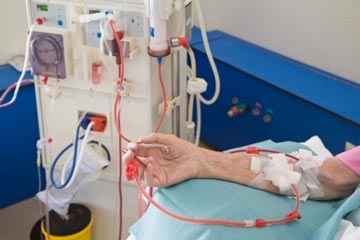
Plasmapheresis
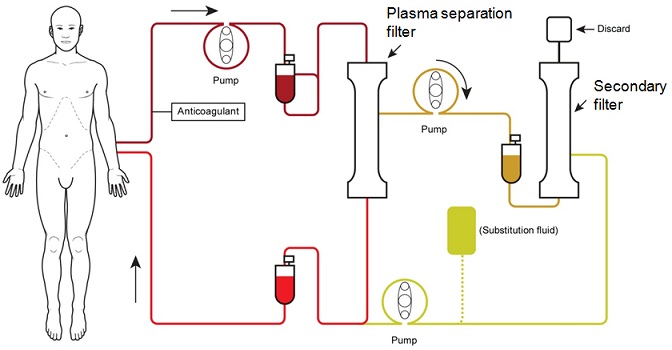
What is plasmapheresis? Plasmapheresis is a procedure in which blood is separated into cells and plasma (liquid). The plasma is removed and replaced with fresh frozen plasma, a blood product called albumin and/or a plasma substitute. The procedure is often referred to as plasma exchange.
Why should I have plasmapheresis?Plasmapheresis may be recommended for a few reasons:
- To stabilize a rapid decrease in muscle strength.
- To reduce moderate to severe muscle weakness before surgery.
- To add to present treatment if current forms of therapy are providing insufficient control of the disease.
The number of plasmapheresis treatments needed depends on the protocol the neuro surgeon has determined is best for the patient. Some patients are treated on a Monday/Wednesday/Friday schedule. Others are treated on a daily schedule or on a weekly or monthly schedule. Hospitalization may be necessary for treatment. Sometimes plasmapheresis can be done on an outpatient basis.
What should I expect to happen?A needle will be placed in each arm. In some instances, only one arm may be used. If the arm veins are too small to use, the neuro surgeon may place a special long duration indwelling catheter into a large vein in the shoulder or groin. Unless the neuro surgeon has instructed otherwise, it is important to eat before the plasma exchange and not skip any meals. During plasma exchange, the patient may drink fluids. The patient should empty the bladder prior to the procedure and ask the nurse for a bedpan or urinal if needed during the plasma exchange procedure. The patient will need to keep both arms still unless the catheter is placed into a different spot. Wearing comfortable clothing with loose fitting sleeves that pull easily above the elbows will make it easier to place the needles in each arm. Bringing something to read or to do will help pass the time (e.g., a radio or tape/CD player with headphones). If the procedure is being performed with an indwelling catheter, it may be necessary to wear a hospital gown.
How long does plasma exchange take?The time spent on the machine may be one to three hours. This depends upon the patient’s weight, height and the amount of plasma to be exchanged.
How soon will the treatment work?Plasmapheresis works quickly to increase strength. Most patients begin to improve within the first few days of the treatment.
How long will the improvement last?A typical patient who has received three to five exchanges over a week or two would commonly remain stronger for one to two months. After a month or two, the acetylcholine receptor antibodies usually return to pre-treatment levels in the bloodstream.
What are the possible adverse effects?Common adverse effects may include a drop in blood pressure, feelings of faintness, dizziness, blurred vision, coldness, sweating or abdominal cramps. Rare adverse effects may include bleeding as a result of medications used to keep the blood from clotting, tingling associated with the mouth, eyes, fingers or toes and a possible allergic reaction to the solutions, which may result in itching, wheezing or rash.
How do I reduce my fears about the plasmapheresis procedure?Often, anxiety about plasmapheresis—especially during the first few treatments—can produce some unusual sensations that will go away once the patient becomes more comfortable with the procedure. Helpful ways to alleviate fears may include speaking to someone who has been treated with plasmapheresis, discussing concerns with the neuro surgeon.
Take Note
Unless otherwise stated, the information provided here is of a general nature, composed by non-medical personnel. It is meant to be accurate and helpful advice for MG patients. It is not intended to be medical opinion, nor is it a substitute for personal professional medical care.